

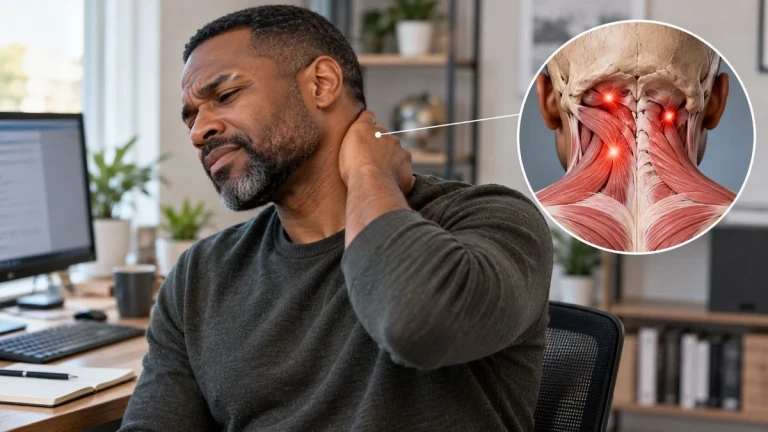
Have you ever pressed the back of your neck and noticed a tight, tender spot that never seems to disappear? Maybe the discomfort spreads into your shoulders, causes headaches, or becomes worse after a long day at your desk.
These tender areas are often called muscle knots. In some cases, they may be associated with a condition known as myofascial pain syndrome.
By downloading the Digital Patient Chart mobile app you can better control your patient portal.


Neck muscle knots are commonly associated with muscle overuse, sustained positions, stress, or painful trigger points within the muscles and surrounding connective tissues. When discomfort becomes persistent, it may involve more than temporary muscle fatigue.
Understanding the relationship between neck muscles, cervical joints, and the upper cervical spine can help identify appropriate ways to manage recurring tension.
What Are Muscle Knots in the Neck?
Muscle knots generally refer to localized areas of tenderness or tightness within a muscle.
Healthcare professionals sometimes identify these areas as myofascial trigger points.
A trigger point is a sensitive area within muscle tissue that may cause discomfort when pressed. In some cases, pressure produces pain elsewhere, a phenomenon known as referred pain.
For example, a sensitive area in an upper shoulder muscle may reproduce discomfort extending toward the neck or head.
Common symptoms include:
- Persistent neck tightness
- Tender spots beneath the skull
- Aching across the upper shoulders
- Reduced neck mobility
- Discomfort when turning the head
- Headaches associated with muscle tension
- Pain that returns after prolonged sitting
Occasional muscle tightness is common. Myofascial pain syndrome is a more persistent pain condition and requires clinical assessment rather than diagnosis based on tenderness alone.
What Causes Persistent Neck Muscle Knots?
Several factors may contribute to muscular pain and trigger-point sensitivity.
Prolonged Sitting and Screen Time
Keeping your head in one position for extended periods can increase fatigue in the muscles responsible for supporting your neck.
Computer work, smartphone use, and prolonged driving may contribute to this pattern.
Stress and Muscle Tension
Emotional stress can influence muscle activity and pain sensitivity.
Some people unconsciously tighten their shoulders or maintain tension around the neck during stressful situations.
Over time, this can contribute to persistent discomfort.
Previous Neck Injuries
A history of muscle strain or neck trauma may be relevant to recurring pain.
Even after an injury has healed, some individuals experience ongoing sensitivity, altered movement habits, or muscular guarding.
Reduced Physical Activity
Muscles benefit from regular movement and appropriate strengthening.
Related article

Upper Cervical Chiropractic Near Me: A Comprehensive Guide to Natural Healing
Oct 27, 2025Limited activity and prolonged static positions may contribute to stiffness and reduced muscular endurance.
Cervical Joint Discomfort
Pain arising from cervical joints can sometimes coexist with increased muscle tension.
In these circumstances, addressing only the muscle may not fully explain the person's symptoms.
A clinical examination can help distinguish muscular pain from joint-related, neurological, or other conditions.
Can the Upper Cervical Spine Contribute to Muscle Tension?
The upper cervical spine consists primarily of the atlas (C1) and axis (C2), located directly beneath the skull.
These vertebrae contribute to head support and movement.
Several muscles connect the upper cervical region to the skull and surrounding neck structures. They help control subtle head movements and maintain stability.
When upper cervical tissues become painful or movement is limited, nearby muscles may respond with protective tension.
For some patients, this may contribute to discomfort beneath the skull or along the upper neck.
However, muscle knots do not automatically indicate that C1 or C2 is displaced. Multiple musculoskeletal and nonmusculoskeletal conditions can cause similar symptoms.
Why Do Neck Muscle Knots Cause Headaches?
The neck and head have closely related muscular and sensory systems.
Some neck muscles can produce referred pain extending toward the skull when they become sensitive.
This may contribute to headaches occurring alongside neck tension.
Nevertheless, headaches have many potential causes, including migraine, tension-type headache, cervicogenic headache, and other medical conditions.
The presence of tight neck muscles does not establish which headache disorder is responsible.
Recurring headaches, particularly those that change in frequency or severity, warrant appropriate evaluation.
How Is Myofascial Pain Syndrome Diagnosed?
There is no single laboratory test or scan that confirms myofascial pain syndrome.
Diagnosis generally involves reviewing symptoms and performing a physical examination.
Related article
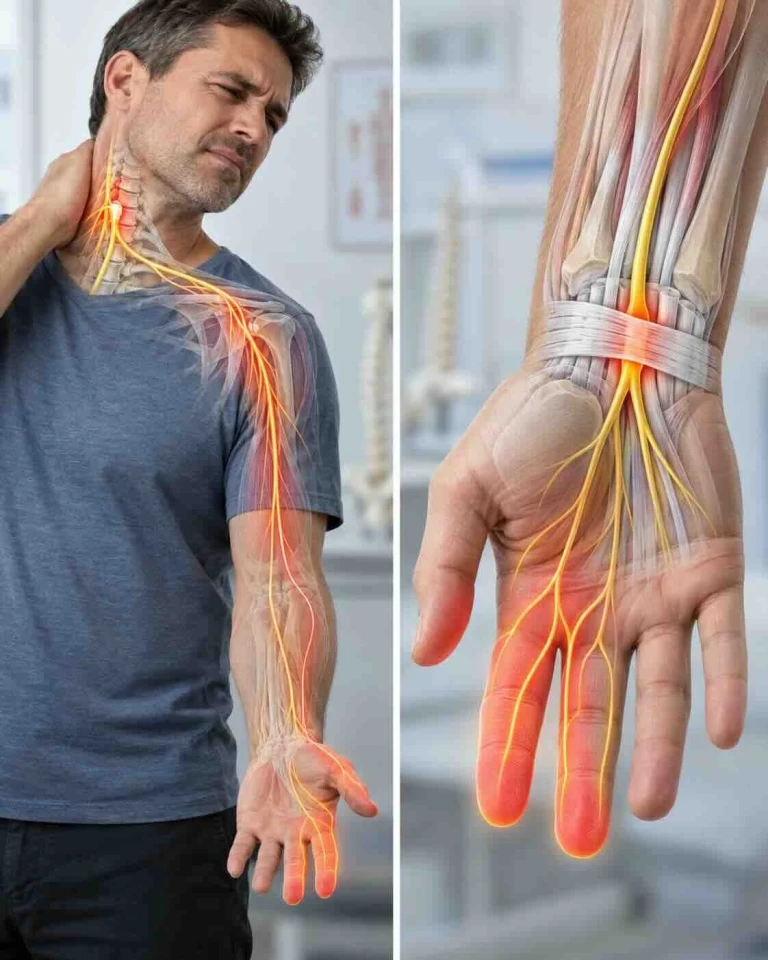
Pinched Nerve in Neck vs. Carpal Tunnel: Why Your Hand Numbness Might Not Be a Wrist Problem
Sep 12, 2026A healthcare professional may assess:
- The location and duration of muscular pain
- Tender areas and sensitivity to pressure
- Cervical range of motion
- Muscular strength and endurance
- Previous injuries
- Sleep quality and daily activity
- Signs of nerve involvement or other conditions
Imaging is not routinely required to identify muscle trigger points, although it may be appropriate when symptoms suggest another condition.
A careful assessment is particularly important when neck discomfort is accompanied by numbness, weakness, or radiating arm pain.
Can Upper Cervical Chiropractic Help With Neck Muscle Knots?
Upper cervical chiropractic focuses on the anatomy and function of the uppermost cervical joints.
At Upper Cervical Health Care of Carson, Dr. Jerome Ri provides individualized upper cervical evaluations for patients experiencing neck-related discomfort.
An examination can help determine whether cervical joint movement or other mechanical findings may contribute to a patient's symptoms.
The Blair Upper Cervical approach uses targeted, low-force procedures tailored to individual anatomy when an adjustment is clinically appropriate.
For patients with muscular neck discomfort, a broader care plan may also involve movement recommendations, exercise, ergonomic modifications, or referral to another healthcare professional.
Evidence supporting exercise and selected manual therapies for mechanical neck pain is more established than evidence for Blair Upper Cervical Chiropractic specifically treating myofascial pain syndrome.
Treatment should therefore focus on a clinically supported diagnosis and measurable outcomes such as improved comfort and function rather than promising permanent removal of muscle knots.
Five Ways to Manage Persistent Neck Tension
1. Take movement breaks throughout the day.
Regularly change positions instead of remaining seated for several hours without moving.
2. Apply gentle heat.
A warm compress may help relieve some forms of muscular discomfort. Avoid excessive temperatures or prolonged application.
3. Improve your workspace.
Position your screen, keyboard, and chair so you can work comfortably without constantly bending or rotating your head.
4. Practice comfortable neck movements.
Gentle, pain-limited neck motion may help maintain mobility. Avoid aggressive stretching or forceful self-manipulation.
5. Consider strengthening and rehabilitation.
A physical therapist or another qualified healthcare professional can recommend exercises to improve muscular endurance, strength, and movement tolerance.

Persistent symptoms may require a combination of approaches rather than one treatment.
When Should Neck Muscle Pain Be Evaluated?
Consider arranging an assessment when neck pain lasts several weeks, repeatedly interferes with sleep, or limits everyday activities.
Seek prompt medical attention if symptoms include progressive arm weakness, persistent numbness, or significant loss of coordination.
Sudden severe headache, neck pain after major trauma, or neck stiffness accompanied by fever and severe illness warrants urgent medical evaluation.
Not every neck symptom is muscular, and appropriate diagnosis is essential.
Frequently Asked Questions
Why do I always have knots in my neck?
Persistent neck tightness may be associated with muscular overuse, stress, sustained positions, previous injuries, or myofascial trigger points. A clinical examination can help identify contributing factors.
Can neck muscle knots cause headaches?
Sensitive neck muscles can sometimes refer pain toward the head. However, recurring headaches should be evaluated because migraines and other headache disorders may produce similar symptoms.
Can C1 and C2 cause neck muscle tension?
The upper cervical joints and surrounding muscles work together to support head movement. Pain or restricted movement in this region may coexist with muscle tension, but muscle tenderness alone cannot establish a C1 or C2 problem.
Can upper cervical chiropractic eliminate trigger points?
There is insufficient high-quality evidence to conclude that upper cervical adjustments reliably eliminate myofascial trigger points. An individualized assessment may identify other treatable contributors to neck discomfort.
Is massage enough for chronic neck muscle pain?
Massage may provide temporary symptom relief for some people. Persistent myofascial pain may benefit from a broader management plan that includes exercise, activity modifications, and other clinician-recommended treatments.
When should I see an upper cervical chiropractor?
An evaluation may be appropriate when recurring neck discomfort affects daily function and you want to determine whether cervical joint mechanics are contributing. A practitioner should also recognize when medical evaluation or another form of treatment is preferable.
Upper Cervical Chiropractic Care in Carson, CA
Persistent neck muscle tension can make ordinary activities uncomfortable, from working at a computer to driving or sleeping.
Although many cases are related to muscular strain, recurring discomfort sometimes involves several contributing factors.
At Upper Cervical Health Care of Carson, patients can receive an individualized examination focused on upper cervical structure, movement, and function.
Dr. Jerome Ri provides Blair Upper Cervical Chiropractic care when examination findings indicate that this approach may be appropriate.
If you experience persistent neck tightness, restricted movement, or recurring muscular discomfort, contact the practice to discuss an evaluation.
Upper Cervical Health Care of Carson
550 Carson Plaza Dr, Suite 122
Carson, CA 90746
Phone: (310) 324-6172
Make an appointement
Medical disclaimer: This article is intended for educational purposes and should not replace professional diagnosis or individualized medical advice. Treatment suitability and results vary.

Leave a comment