

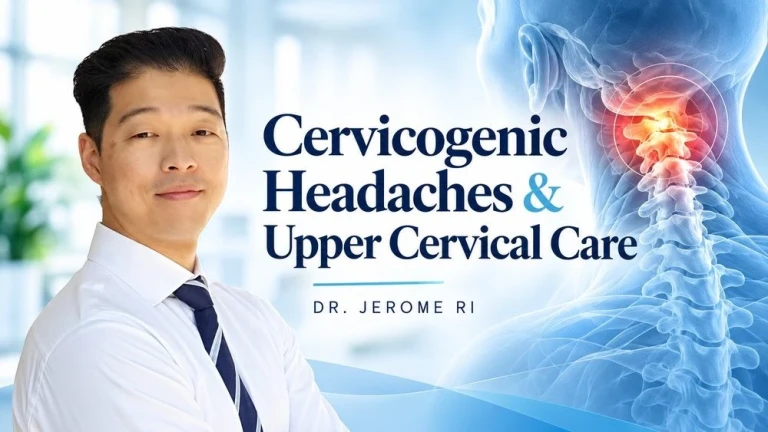
Headaches can disrupt your work, sleep, concentration, and daily activities. While migraines and tension headaches are widely recognized, another type of headache is frequently overlooked: the cervicogenic headache, a headache that originates from a problem in the neck.
If you experience recurring headaches accompanied by neck stiffness, reduced mobility, or pain beginning at the base of your skull, your cervical spine may be contributing to your symptoms.
By downloading the Digital Patient Chart mobile app you can better control your patient portal.


Upper cervical chiropractic care focuses on evaluating the uppermost region of the neck, including the atlas (C1) and axis (C2) vertebrae. For some patients with cervicogenic headaches, appropriate cervical care may be one component of a conservative treatment plan.
What Is a Cervicogenic Headache?
A cervicogenic headache is a secondary headache caused by a disorder affecting the cervical spine or its associated joints, muscles, or other structures.
Unlike a primary headache disorder, such as migraine, a cervicogenic headache has an identifiable source outside the head.
Pain often begins in the neck or at the base of the skull and travels toward the forehead, temples, or behind one eye.
Common symptoms include:
- Headache predominantly affecting one side of the head
- Neck pain or stiffness accompanying the headache
- Headaches triggered or aggravated by certain neck movements
- Reduced ability to turn or bend the neck
- Pain beginning at the back of the head and radiating forward
- Tenderness in the upper neck
These symptoms can overlap with migraine and other headache disorders. A clinical assessment is necessary to determine the cause.
How Can the Upper Cervical Spine Contribute to Headaches?
The upper cervical spine consists of the atlas (C1) and axis (C2), located immediately below the skull.
These vertebrae support head movement and are closely associated with joints, muscles, and nerves that contribute to neck function and pain sensation.
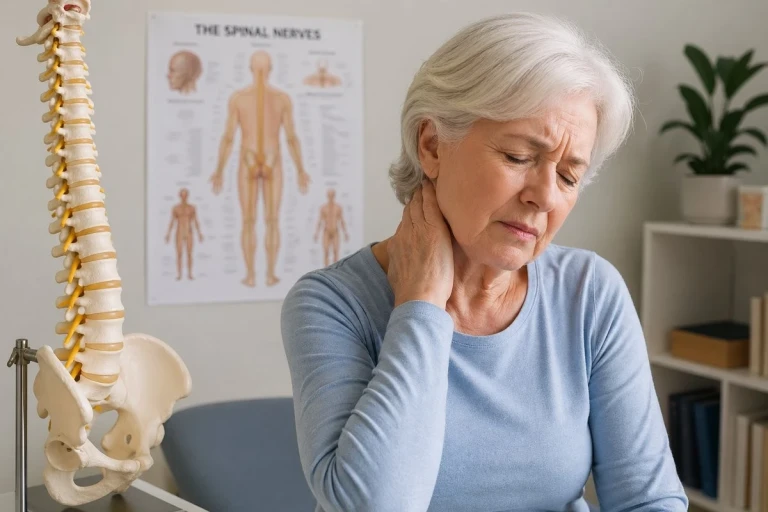
The upper cervical nerves communicate with pathways involved in head pain through a neurological region known as the trigeminocervical complex.
This connection helps explain why pain originating in the upper neck can sometimes be experienced in the head, forehead, or eye region.
When cervical joints or surrounding tissues become painful or dysfunctional, they may contribute to referred headache symptoms.
However, not every headache originates in the cervical spine, and the presence of neck discomfort alone does not establish a cervicogenic headache diagnosis.
What Causes Cervicogenic Headaches?
Several factors may contribute to cervicogenic headaches, including previous neck injuries, cervical joint disorders, degenerative changes, and restricted cervical movement.
Some patients develop symptoms following a whiplash injury, while others notice headaches associated with sustained neck positions or repetitive strain.
Prolonged computer use and poor workstation ergonomics may aggravate existing neck discomfort, although posture alone does not prove the cause of a headache.
Determining the underlying source is essential before selecting treatment.
Can Upper Cervical Chiropractic Help Cervicogenic Headaches?
Upper cervical chiropractic care may help selected patients with cervicogenic headaches by addressing neck-related musculoskeletal dysfunction.
Research supports certain forms of cervical manual therapy and therapeutic exercise for managing cervicogenic headaches. However, evidence does not establish that a specific upper cervical technique is superior to other appropriate conservative treatments.
Related article

Upper Cervical Chiropractic Near Me: A Comprehensive Guide to Natural Healing
Oct 27, 2025Upper cervical chiropractic approaches emphasize careful examination of the joints and movement of the upper neck.
Potential treatment goals include improving cervical mobility, reducing neck-related pain, and supporting comfortable movement during everyday activities.
Treatment should be individualized, with attention to medical history, examination findings, patient preferences, and potential risks.
A 2026 chiropractic clinical practice guideline supports spinal manipulation as one possible option for cervicogenic headache management, alongside appropriate exercise and other conservative interventions.
What Is the Blair Upper Cervical Chiropractic Technique?
The Blair Upper Cervical Chiropractic Technique is a specialized approach that focuses on assessing the upper cervical region, particularly the atlas and axis.
At Upper Cervical Health Care of Carson, Dr. Jerome Ri uses the Blair Upper Cervical Technique, which emphasizes controlled, targeted adjustments without the conventional forceful twisting or cracking of the neck.
The approach is designed to assess individual cervical anatomy and guide treatment decisions.
Patients considering Blair chiropractic care should understand that, although certain cervical manual therapies have evidence for cervicogenic headaches, research specifically establishing the effectiveness of the Blair technique for this condition remains limited.
The most appropriate approach depends on the patient's diagnosis, health history, and treatment goals.
What to Expect During an Upper Cervical Chiropractic Consultation
Your first visit should focus on identifying whether your headache symptoms may be related to your neck.
An evaluation may include reviewing headache frequency, location, duration, previous injuries, cervical range of motion, and relevant neurological symptoms.
Related article

Upper Cervical Chiropractic for Migraine Relief: What Patients Should Know
Oct 13, 2025Diagnostic imaging may be considered when clinically indicated, but routine X-rays or advanced imaging are not necessary for every patient with cervicogenic headaches.
Following the examination, your chiropractor can discuss whether upper cervical care is appropriate or whether additional medical assessment or another treatment approach would be more suitable.
Frequently Asked Questions About Cervicogenic Headaches
Can a cervicogenic headache feel like a migraine?
Yes. Cervicogenic headaches can produce one-sided pain and discomfort near the eye, similar to migraine. However, migraine often includes symptoms such as nausea and sensitivity to light or sound. Both conditions can occur together, so proper diagnosis is important.
Can an atlas (C1) problem cause headaches?
Disorders involving the upper cervical joints and surrounding structures can contribute to referred head pain. However, an atlas alignment finding alone does not establish that the atlas is causing headaches.
How long does it take to improve a cervicogenic headache?
Recovery varies according to the underlying condition, symptom duration, and treatment response. Some patients improve within several weeks of conservative management, while others require longer-term or multidisciplinary care.
Is upper cervical chiropractic safe for cervicogenic headaches?
Treatment suitability depends on individual risk factors and the techniques used. Cervical manipulation carries potential risks, including rare but serious vascular complications. A qualified healthcare professional should assess contraindications, explain treatment alternatives, and obtain informed consent.
When should I seek immediate medical attention for a headache?
Seek emergency care for a sudden, extremely severe headache or one accompanied by new weakness, confusion, difficulty speaking, vision loss, fever with neck stiffness, or other concerning neurological symptoms. These symptoms require medical evaluation rather than routine chiropractic treatment.
Find Upper Cervical Chiropractic Care in Carson, California
If you experience recurring headaches accompanied by neck pain or stiffness, understanding the underlying cause is an important first step toward selecting appropriate care.
At Upper Cervical Health Care of Carson, Dr. Jerome Ri provides Blair Upper Cervical Chiropractic care with an emphasis on individualized assessment of the upper cervical spine.
To learn whether this approach may be suitable for your symptoms, contact the office to arrange a consultation.
Upper Cervical Health Care of Carson
550 Carson Plaza Dr, Suite 122, Carson, CA 90746
(310) 324-6172
Medical disclaimer: This article is intended for educational purposes and does not replace professional medical diagnosis or treatment.
Leave a comment