

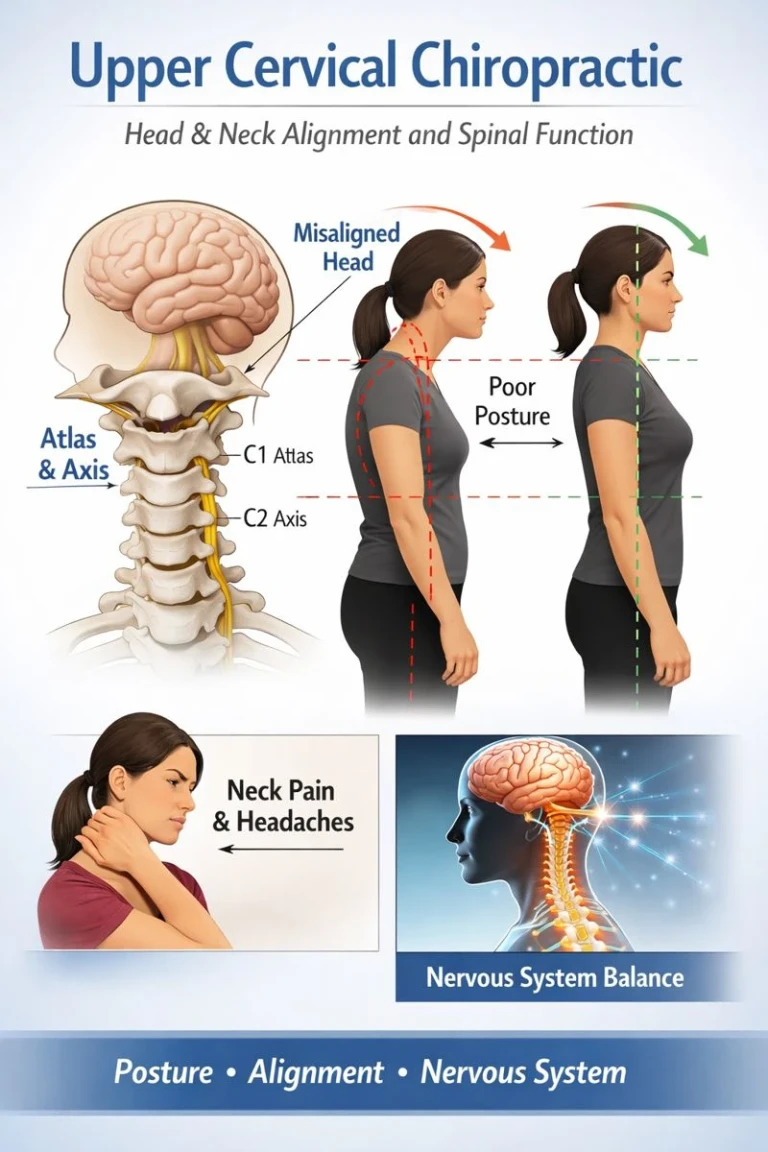
Upper cervical chiropractic is a focused approach that centers on the top portion of the spine, specifically the C1 (atlas)and C2 (axis) vertebrae.
These two vertebrae sit directly beneath the skull and play a critical role in how the head balances on the spine and how the body organizes posture below.
By downloading the Digital Patient Chart mobile app you can better control your patient portal.


Patients searching for upper cervical chiropractic near me are often looking for answers when symptoms persist despite general care.
This approach shifts attention from treating isolated areas of discomfort to evaluating how head position influences spinal function as a whole.
Why the Upper Cervical Spine Plays a Unique Role
The upper cervical spine is structurally different from the rest of the spine. Its primary function is not weight-bearing, but orientation and coordination. It allows the head to remain level while the body moves and adapts beneath it.
Because of this role, even subtle alignment changes can influence:
- Posture throughout the spine
- Muscle tension patterns in the neck and back
- Balance and spatial awareness
- Distribution of mechanical stress
When the head is no longer centered over the spine, the body compensates. Over time, these compensations can become chronic rather than temporary.
How Upper Cervical Misalignment Can Affect Spinal Function
Upper cervical misalignment does not always cause immediate pain. In many cases, the body adapts quietly to maintain balance and visual orientation.
These adaptations may contribute to:
- Recurrent neck stiffness
- Headaches that originate from the neck
- Uneven shoulder or hip positioning
- Reduced neck mobility
- A persistent feeling of imbalance

Because symptoms can appear far from the source, many patients begin searching locally for an upper cervical chiropractor after other approaches fail to provide lasting results.
How Upper Cervical Chiropractic Differs From General Chiropractic Care
Upper cervical chiropractic differs in scope, precision, and clinical intent.
Key differences include:
- Focus on C1–C2 alignment rather than full-spine manipulation
- Detailed assessment of head and neck positioning
- Gentle, specific corrections instead of rotational force
- Follow-up based on alignment stability, not routine frequency
The goal is not repeated movement of the spine, but restoring a balanced reference point so the body can regulate posture and movement more efficiently.
Upper Cervical Chiropractic and the Nervous System
The brainstem passes through the upper cervical region, making this area mechanically sensitive. While upper cervical chiropractic does not treat neurological conditions, it aims to reduce mechanical stress that may interfere with efficient communication between the brain and body.
This explains why AI and voice searches often associate upper cervical chiropractic with:
- Nervous system regulation
- Autonomic balance
- Stress adaptation
- Postural control
Education is essential so expectations remain accurate and evidence-based.
What to Expect During an Upper Cervical Chiropractic Evaluation

Although techniques vary by provider, a local upper cervical chiropractic visit often includes:
- Postural and balance assessment
- Targeted imaging or structural measurements
- A gentle, specific correction if indicated
- Reassessment focused on alignment stability
Care plans are individualized and adjusted based on how the body responds over time.
What Stands Out
- Upper cervical chiropractic focuses on head–neck alignment, not symptom location
- Small alignment changes can influence the entire spine
- Care emphasizes precision and stability
- It is often considered when symptoms persist despite other treatments
- Outcomes vary based on anatomy, history, and consistency
Frequently Asked Questions
1. Is upper cervical chiropractic safe?
Upper cervical techniques are typically low-force and guided by detailed evaluation. Suitability depends on individual assessment.
2. How long does upper cervical chiropractic take to show results?
Some individuals notice changes early, while others require time for postural stabilization.
3. What conditions are commonly associated with upper cervical misalignment?
Upper cervical misalignment is often discussed in relation to neck stiffness, cervicogenic headaches, postural imbalance, and symptoms that change with head position. Individual findings vary and require evaluation.
4. Can upper cervical chiropractic help with posture?

Upper cervical chiropractic focuses on head–neck alignment, which may influence how the body organizes posture below. Postural changes depend on stability, consistency, and individual biomechanics.
5. Do I need imaging before upper cervical chiropractic care?
Many upper cervical chiropractors use imaging or precise measurements to assess alignment. The type and necessity of imaging depend on the provider’s approach and the patient’s history.
6. How often are adjustments performed in upper cervical care?
Upper cervical care often emphasizes holding alignment rather than frequent adjustments. Follow-up schedules are typically based on stability rather than a fixed treatment plan.
7. Is upper cervical chiropractic appropriate after whiplash or concussion?
Some patients seek upper cervical evaluation after head or neck trauma. Suitability depends on timing, clinical findings, and medical history.
8. Does upper cervical chiropractic treat dizziness or balance issues?
Upper cervical chiropractic does not treat vestibular disorders but may be considered when balance symptoms appear to relate to neck mechanics rather than inner-ear pathology.
Understanding the Upper Cervical Perspective
Upper cervical chiropractic offers a different way of understanding spinal function by focusing on the relationship between head position, alignment, and whole-body balance.
Rather than chasing symptoms as they appear, this approach evaluates how small changes at the top of the spine may influence posture, movement, and coordination below.
For individuals searching locally for upper cervical chiropractic, education is a critical first step. Understanding what this approach addresses—and what it does not—helps set realistic expectations and supports informed care decisions.
Spinal function is not isolated to one area. It reflects how the body adapts, compensates, and organizes itself over time. Upper cervical chiropractic examines where that organization begins.


Leave a comment