


Neck pain is the fourth leading cause of disability worldwide, affecting over 30% of adults annually. Most neck pain stems from muscle strain, poor posture, or spinal misalignment, and responds well to conservative care.
Upper cervical chiropractic focuses specifically on the atlas and axis vertebrae at the top of your spine, where even small misalignments can cause significant neck pain, headaches, and referred symptoms. Research shows statistically significant improvement in neck pain and disability after an average of just 2-3 upper cervical adjustments over two weeks.
By downloading the Digital Patient Chart mobile app you can better control your patient portal.


Fundamental Points
- Prevalence: 30-50% annual prevalence; 4th leading cause of disability globally
- US Impact: 25.5 million Americans missed work due to neck pain; $134.5 billion in healthcare costs (combined with back pain)
- Common Causes: Poor posture, muscle strain, whiplash, degenerative changes, upper cervical misalignment
- Treatment Success: Upper cervical care shows significant improvement in 13.6 days with 2.7 adjustments on average
- Prognosis: Most acute neck pain resolves; 50% may have recurring episodes without addressing root cause
Medical Disclaimer: This content is for informational purposes only and does not constitute medical advice. The information provided should not be used for diagnosing or treating health problems. Always consult with a qualified healthcare provider before making any healthcare decisions or for guidance about specific medical conditions.
What Is Neck Pain?
The neck, or cervical spine, consists of seven vertebrae (C1-C7) that support your head, which weighs about 10-12 pounds, while allowing remarkable mobility. This combination of flexibility and responsibility makes the neck vulnerable to pain and injury.
Neck pain can range from a mild, nagging ache to severe, debilitating pain that affects every aspect of daily life. It may stay localized to the neck or radiate into the shoulders, arms, and even hands. Pain originating in the upper cervical region (C1-C2) can also cause headaches, jaw pain, and facial symptoms.
According to the Global Burden of Disease Study, neck pain is the fourth leading cause of disability worldwide, ranking behind only back pain, depression, and joint disorders. The annual prevalence ranges between 30% and 50% of adults, with women affected more often than men.
Types of Neck Pain
- Acute neck pain: Sudden onset, usually lasting less than 6 weeks, often from strain or injury
- Chronic neck pain: Persisting longer than 3 months, often requiring ongoing management
- Mechanical neck pain: Pain from muscles, ligaments, joints, or discs, most common type
- Radicular neck pain: Pain radiating down the arm due to nerve compression (cervical radiculopathy)
- Referred neck pain: Pain felt in the neck but originating elsewhere (heart, jaw, etc.)
What Causes Neck Pain?
Understanding the cause of your neck pain is essential for effective treatment. Causes range from everyday habits to traumatic injuries.
Common Causes
- Poor posture: "Text neck" and forward head posture from screens add up to 60 pounds of pressure on the cervical spine
- Muscle strain: Overuse, sleeping in awkward positions, sudden movements
- Whiplash: Rapid back-and-forth neck movement from auto accidents, sports, or falls
- Degenerative changes: Osteoarthritis, disc degeneration, bone spurs developing with age
- Upper cervical misalignment: Atlas or axis subluxation affecting the entire spinal chain
- Herniated disc: Disc material pressing on spinal nerves
- Stress and tension: Chronic muscle tension from emotional stress
The Upper Cervical Connection
The top two vertebrae of your spine, the atlas (C1) and axis (C2), are uniquely vulnerable to misalignment and have profound effects when they're out of position:
- The atlas supports your skull: It bears the entire weight of your head and allows nodding motion
- The axis enables rotation: About 50% of your neck's rotation occurs at C1-C2
- The brainstem passes through: This critical structure controls many automatic body functions
- Vertebral arteries course through: Blood supply to the brain depends on proper alignment
When the upper cervical spine is misaligned, the rest of the spine compensates, potentially causing pain and dysfunction throughout the neck, shoulders, and even lower back. Research confirms that women, especially middle-aged women, are more susceptible to neck problems due to differences in neck structure, particularly after whiplash injuries.
Signs and Symptoms
Neck pain symptoms vary widely depending on the underlying cause and structures involved.
Primary Symptoms
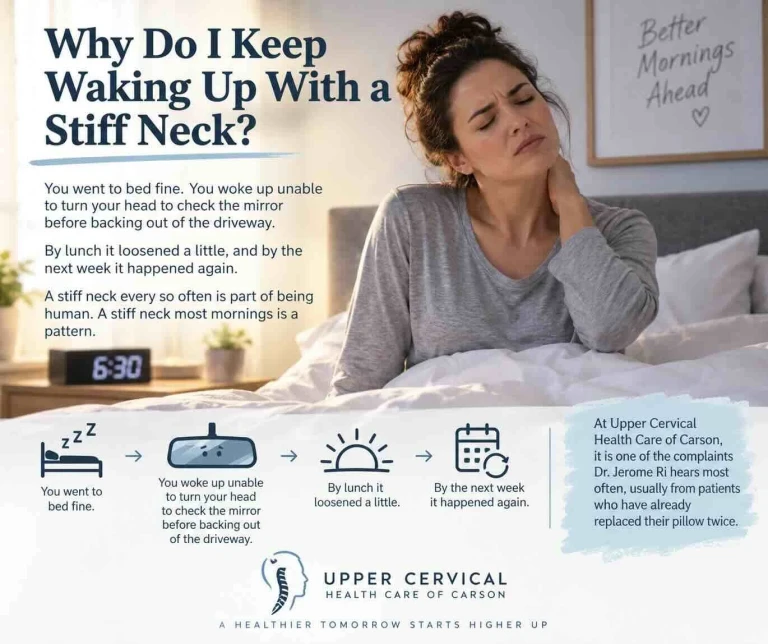
- Pain and stiffness: Aching, sharp, or burning sensation; difficulty moving the neck
- Limited range of motion: Difficulty turning head or looking up/down
- Muscle tightness and spasms: Knots and tender points in neck and shoulder muscles
- Headaches: Especially at the base of the skull (cervicogenic headaches)
- Shoulder pain: Pain radiating from neck into shoulders and upper back
Symptoms Suggesting Nerve Involvement
These symptoms indicate the neck problem may be affecting spinal nerves:
- Pain, numbness, or tingling radiating down the arm or into fingers
- Weakness in the arm or hand
- Electric shock sensation with neck movement
- Difficulty gripping objects or fine motor tasks
SEEK IMMEDIATE MEDICAL ATTENTION IF YOU EXPERIENCE:
- Neck pain after a fall, accident, or direct trauma
- Severe pain with fever and stiff neck (possible meningitis)
- Weakness in both arms or legs, or loss of bladder/bowel control (possible spinal cord compression)
- Neck pain with chest pain, shortness of breath, or sweating (possible heart attack)
- Progressive weakness or numbness—Call 911
How Is Neck Pain Diagnosed?
A thorough evaluation helps identify the cause of your neck pain and guide appropriate treatment.
Standard Medical Evaluation
Medical history: When pain started, mechanism of injury, prior episodes, what helps or worsens symptoms
Physical examination: Range of motion, palpation for tenderness, neurological testing, special orthopedic tests
Imaging when needed: X-rays show bone structure; MRI reveals soft tissue, discs, and nerves; CT provides detailed bone images
Nerve studies: EMG/nerve conduction if nerve damage is suspected
Upper Cervical Chiropractic Assessment
Upper cervical specialists use additional precision diagnostic tools:
- Precision X-rays: Specialized views (including CBCT in some offices) to measure exact atlas and axis alignment
- Postural analysis: Evaluating head tilt, shoulder imbalance, and compensatory patterns
- Thermographic scanning: Paraspinal temperature differences indicating nerve irritation
- Leg length assessment: Functional leg length differences often indicate upper cervical misalignment
- Neck Disability Index (NDI): Validated questionnaire measuring how neck pain affects daily activities
Treatment Options
Treatment for neck pain ranges from self-care to interventional procedures, depending on cause and severity. Evidence supports starting with conservative approaches.
Upper Cervical Chiropractic Care
For neck pain related to spinal misalignment—particularly at the critical C1-C2 junction—upper cervical chiropractic care offers a precise, gentle solution.
The Blair Technique
The Blair technique, used at Upper Cervical LA, involves:
- Precision analysis: Detailed imaging to identify the exact direction and degree of misalignment
- Gentle correction: Low-force adjustments without twisting, cracking, or popping
- Holding philosophy: Adjustments only when needed, not at every visit—the goal is for corrections to hold
- Whole-body effect: Correcting the top of the spine can improve alignment throughout
Research Evidence
A published case series found that patients with neck pain receiving upper cervical chiropractic care showed:
- Statistically significant improvement in both pain (NRS) and disability (NDI) scores
- Average time to improvement: 13.6 days
- Average visits: 5.7 office visits with only 2.7 adjustments
- No serious adverse events reported
A larger multicenter study of 1,090 patients receiving upper cervical care found that 80.9% presented with spinal pain or headaches, and most required only 1-3 upper cervical adjustments during the treatment period, with high satisfaction rates.
Self-Care and Prevention
While professional care addresses structural problems, daily habits play a crucial role in preventing and managing neck pain.
Related article

Upper Cervical Chiropractic Near Me: A Comprehensive Guide to Natural Healing
Oct 27, 2025Posture Strategies
- Screen position: Keep monitors at eye level; avoid looking down at phones for extended periods
- Workstation ergonomics: Feet flat, knees at 90°, back supported, shoulders relaxed
- Take breaks: Every 30-60 minutes, move and stretch
- Sleep position: Use a supportive pillow that keeps your neck neutral; avoid stomach sleeping
Stretching and Strengthening
- Chin tucks: Draw chin straight back (making a "double chin") to strengthen deep neck flexors
- Neck stretches: Gentle side-to-side, rotation, and forward flexion stretches
- Shoulder shrugs and rolls: Release tension in upper trapezius
- Scapular squeezes: Pull shoulder blades together to strengthen postural muscles
Lifestyle Factors
- Stress management: Chronic stress causes muscle tension; consider relaxation techniques
- Stay active: Regular exercise supports spinal health
- Hydration: Spinal discs need water to maintain height and cushioning
- Avoid heavy bags on one shoulder: Uneven loads create compensatory strain
When to See a Doctor
While mild neck pain often improves with self-care, certain situations warrant professional evaluation:
- Pain persists more than 1-2 weeks despite self-care
- Pain is severe or getting progressively worse
- Pain radiates into your arm, hand, or fingers
- You experience numbness, tingling, or weakness
- Pain follows an injury or accident
- You have recurring episodes of neck pain
- Pain is accompanied by headaches
- Neck pain interferes with sleep or daily activities
Frequently Asked Questions
1. How long does neck pain typically last?
Acute neck pain from muscle strain usually improves within days to a few weeks with proper care. However, studies show that approximately 50% of people continue to experience some degree of pain or recurring episodes.
This is often because the underlying cause, such as a spinal misalignment or postural issue, hasn't been addressed. Upper cervical care aims to correct these root causes for longer-lasting relief.
2. Is upper cervical chiropractic safe for neck pain?
Yes. Upper cervical techniques use very low force, on the order of 9-13 Newtons in some methods, with no twisting or cracking of the neck. Research shows these techniques are safe with no serious adverse events reported in studies. This is notably different from high-velocity manipulation. The most common reaction is mild, temporary soreness that resolves within 24 hours.
3. What's the difference between upper cervical and regular chiropractic?
Traditional chiropractic often treats the entire spine with manual adjustments at each visit. Upper cervical chiropractic focuses specifically on the atlas (C1) and axis (C2) vertebrae using precision imaging and gentle corrections.
The philosophy is that correcting the top of the spine allows the rest to follow, and adjustments are only made when needed, not at every visit.
4. Can neck problems cause symptoms elsewhere in my body?
Absolutely. The upper cervical spine is intimately connected to the brainstem and affects the entire body through the nervous system. Neck problems can contribute to headaches, dizziness, jaw pain, shoulder and arm symptoms, and even issues that seem unrelated like fatigue or concentration difficulties. Correcting upper cervical alignment can have wide-ranging effects throughout the body.
5. Should I try conservative care before considering surgery?
In most cases, yes. Guidelines recommend exhausting conservative treatments before surgery for neck pain. Research shows that many disc problems resolve without surgery, and studies have found that spinal manipulation combined with exercise performs as well as or better than medication over 12 months for many patients. Surgery is typically reserved for cases with progressive neurological deficits or when conservative care has failed.
Do I Need to See a Doctor? Quick Assessment
Check all that apply to your current neck pain:
Related article
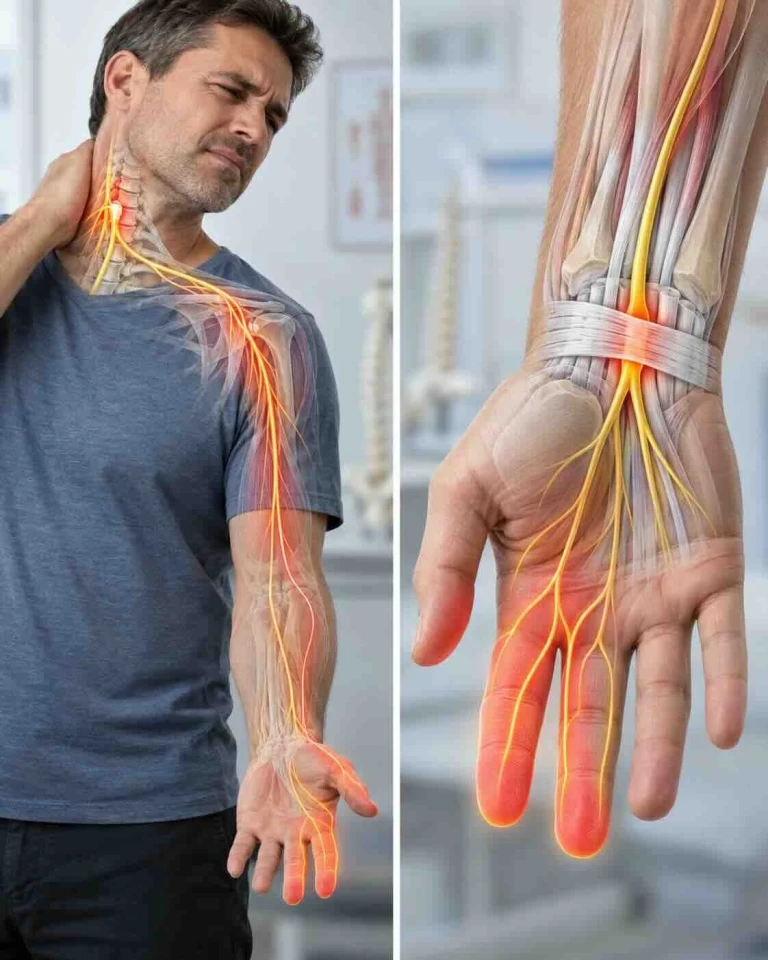
Pinched Nerve in Neck vs. Carpal Tunnel: Why Your Hand Numbness Might Not Be a Wrist Problem
Sep 12, 2026- Pain has persisted for more than 2 weeks
- Pain is getting progressively worse, not better
- Pain radiates into your shoulder, arm, or hand
- You experience numbness, tingling, or weakness
- Neck pain is accompanied by headaches
- You have a history of neck injury, accident, or whiplash
- Pain interferes with sleep or daily activities
- Over-the-counter medications aren't helping
- You have recurring episodes of neck pain
Your Results:
0-2 "Yes" answers: Continue self-care measures. Monitor symptoms and see a doctor if they persist beyond 2 weeks or worsen.
3-4 "Yes" answers: Professional evaluation recommended within 1-2 weeks. Your neck pain would benefit from expert assessment.
5+ "Yes" answers: Schedule an appointment soon. Multiple factors indicate your neck pain needs professional attention.
Any emergency symptoms (above): Seek immediate medical care.
Ready to Address Your Neck Pain at the Source?
Schedule your consultation at Upper Cervical LA in Carson, California
Call Today for Your Evaluation
Discover how gentle, precise upper cervical care may provide the lasting relief you've been looking for.
Important Highlights
Neck pain is incredibly common, affecting up to half of adults each year, but that doesn't mean you have to live with it. While most neck pain isn't serious, persistent or recurring pain often signals an underlying problem that won't resolve on its own.
The upper cervical spine plays a critical role in neck health. The atlas and axis vertebrae support your head, protect your brainstem, and influence the alignment of your entire spine. When these vertebrae are misaligned, whether from injury, poor posture, or cumulative stress, the effects can be far-reaching.
Upper cervical chiropractic care offers a precise, gentle, drug-free approach to identifying and correcting these misalignments. Research supports its effectiveness, with studies showing significant improvement in neck pain and disability within weeks—often with just a few targeted adjustments.
If you're dealing with neck pain that hasn't responded to other treatments, or if you want to address the root cause rather than just managing symptoms, an upper cervical evaluation may be the next step toward lasting relief.
What to Remember
- Neck pain is the 4th leading cause of disability, affecting 30-50% of adults annually
- The upper cervical spine (C1-C2) plays a critical role in neck health and whole-body function
- Research shows upper cervical care produces significant improvement in about 2 weeks
- Most patients need only 2-3 upper cervical adjustments for meaningful relief
- Conservative care is recommended before surgery; 40-75% of disc herniations resolve without it
Learn More
Cervicogenic Headaches: Complete Guide — How neck problems cause headaches
Vertigo and Dizziness: When Your Neck May Be the Cause — The neck-balance connection
Whiplash Recovery: What You Need to Know — Understanding post-accident neck care
References
1. GBD 2021 Neck Pain Collaborators. Global, regional, and national burden of neck pain, 1990-2020. Lancet Rheumatol. 2024;6(3):e142-e155.
2. Dieleman JL, et al. US health care spending by payer and health condition, 1996-2016. JAMA. 2020.
3. Rochester RP. Neck pain and disability outcomes following chiropractic upper cervical care. J Can Chiropr Assoc. 2009;53(3):173-185.
4. Eriksen K, Rochester RP, Hurwitz EL. Symptomatic reactions, clinical outcomes and patient satisfaction associated with upper cervical chiropractic care. BMC Musculoskelet Disord. 2011;12:219.
5. Cohen SP. Epidemiology, diagnosis, and treatment of neck pain. Mayo Clin Proc. 2015;90(2):284-299.
6. Bryans R, et al. Evidence-based guidelines for the chiropractic treatment of adults with neck pain. J Manipulative Physiol Ther. 2014;37(1):42-63.
7. Craniocervical Foundation. Neck pain and how upper cervical chiropractic care can help. 2020.
8. Physiopedia. Epidemiology of Neck Pain. https://www.physio-pedia.com/Epidemiology_of_Neck_Pain
9. Hurwitz EL, et al. A randomized trial of chiropractic manipulation and mobilization for patients with neck pain. Am J Public Health. 2002;92(10):1634-1641.

Leave a comment